报告题目:Molecules as antennas: physics-guided inverse design of molecular high-harmonic emitters
报告人:Camilo Ruiz 副教授 西班牙萨拉曼卡大学
时间:2026年11月26日(周四),下午3:30
地点:光电大楼1楼党员活动室
联系人:许亮
报告简介:
Optimisation of high-harmonic generation has so far focused on the driving pulse, with the molecular target treated as a fixed medium. We address the inverse problem: at fixed laser parameters (2 µm, 7.7×10¹² W/cm²), we identify the molecular structures that maximise the aligned-molecule yield in a fixed spectral window. We compute the yield for about 2,000 molecules with a multichannel strong-field approximation, and we search chemical space with Bayesian optimisation and evolutionary algorithms in the latent space of a variational autoencoder, subject to ionisation and stability constraints. Writing the recombination dipole as an antenna array of atomic emitters shows that the yield is governed by two quantities, the ionisation potential and a band strength, together with a symmetry selection rule. Ordering the latent space by these quantities improves the search by about one order of magnitude, whereas the choice of optimiser changes the result by only a few tenths of a decade. The optimisation also yields two design rules. In saturated chains aligned with the field, the yield increases by 0.5–1 decade per CH₂ unit. In rings, the π-HOMO emission is switched on or off by symmetry depending on the orientation.
报告人简介:
Camilo Ruiz 是萨拉曼卡大学副教授,同时担任 EMC3 研究组首席研究员。他曾在德累斯顿马克斯-普朗克研究所与伦敦帝国理工学院从事博士后研究。发表学术论文90余篇,包括Physical Review Letters等一流期刊。他研究方向涵盖强场物理、阿秒物理、激光等离子体相互作用以及气候变化科普教育,目前重点关注机器学习在强场物理中的应用。
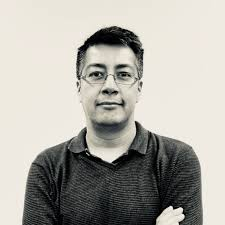
Camilo Ruiz holds a PhD in Physics from the University of Salamanca. He was a postdoctoral researcher at the Max Planck Institute in Dresden, Imperial College London and the University of Santiago de Compostela, and a Ramón y Cajal fellow at the Spanish Centre for Pulsed Lasers (CLPU). He has published around 90 papers in journals such as Physical Review Letters and has taken part in numerous research projects. His interests include ultra-intense laser–matter interaction, attosecond science, laser-driven particle acceleration and climate change education. He is principal investigator of the E_MC³ research group, a member of the Institute of Fundamental Physics and Mathematics, and Profesor Titular in the Department of Science Education at the University of Salamanca.